

Funds
Fonds
(Runtime: 5:00. Read the audio transcript.)
**
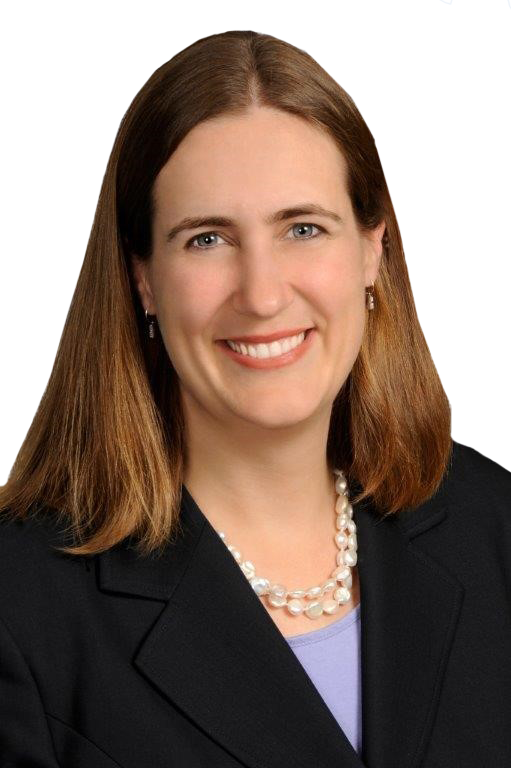
The current moment is exciting for fixed-income investors as opportunities reveal themselves at both ends of the duration curve, says Katie Klingensmith, vice-president, fixed income with Brandywine Global Investment Management.
Klingensmith said economic uncertainty suggests good reason for exposure to the long end of the yield curve. But current trends also make the short end look attractive.
“We no longer think the primary opportunities are going to come from the curve. We still certainly could see some moves in that direction, but we think the risks are much more balanced,” she said. “We’re looking to have exposure to different credit sectors and segments, and we look to have global exposure in different markets, be very nimble, and think across those different curves.”
The uncertain timing of expected rate cuts, and the degree to which those cuts have already been priced into bond prices, make for a complicated picture, she said.
“We still are comfortable with having some additional exposure to the longer part of the curve, because we still think there’s some economic uncertainty and we want to have that safer duration,” she said. “But we want to be very aware of what’s going on in the data, and very aware of where the opportunities are. And we think there are still really interesting income opportunities without a lot of duration.”
In particular, she said, global and U.S. credit look good.
“Even though spreads are pretty narrow, especially given what could be some lingering big economic uncertainty, the overall returns that come from exposure to credit — high-quality and some high-yield credit — make it quite attractive,” she said.
She also sees opportunities in some developed market economies, as well as certain areas of emerging markets.
“I would particularly call out Latin America,” she said. “That’s had a very constructive growth story. They really managed to get inflation under control, real rates are quite attractive, and interesting overall returns are coming from some of those markets.”
And she likes the structured side of fixed-income investing, particularly in U.S. housing-related sectors.
“We think there are few risks of a real material downside there,” she said. “We have found more opportunities with varying amounts of risks, a lot of liquidity and a very clear macro story.”
But focusing on fixed income means watching the Fed closely. And with inflation proving sticky, she said the U.S. central bank will delay cutting.
“That’s tricky, in terms of how it plays out in fixed-income markets. Clearly if we have rates higher for longer, we can enjoy — and I’ll tell you that we are enjoying — those really attractive coupons without taking on a lot of duration.”
She said fixed income will continue to play its traditional role as diversifier in a portfolio.
“Bonds are so much more attractive than they were, in large part because they have actual returns again, and that makes it much easier to buy that potential insurance policy,” she said. “That potential diversification in a broader portfolio? We don’t think that’s going to change anytime soon.”
High-quality government bonds — like those from the U.S., Canada, Germany, some other European countries and Japan — can also serve as a perceived safe harbour, she said.
“When there is a lot of risk in the global economy, there’s an increased demand for those assets. That’s still the case,” she said. “We want to have more of an orientation to those safe bonds.”
Ultimately, Klingensmith said, the timing is right for fixed-income investors to watch the economic data as it comes in and remain nimble.
“It’s an environment where having an investment strategy that is really mindful of all of those different opportunities is important,” she said.
**
This article is part of the Soundbites program, sponsored by Canada Life. The article was written without sponsor input.