The insurance advisors who participated in Investment Executive‘s 2017 Insurance Adviosrs’ Report Card may or may not have much of an investment book of business, which is in stark contrast to their counterparts in the brokerage, mutual fund and full-service dealer and bank distribution channels. In fact, for some insurance advisors, investments represent a major component of their practices while, for others, investments are almost an afterthought.
The result of this underlying heterogeneity is that the data on this aspect of advisors’ businesses tend to be very volatile — depending on who is captured in Investment Executive‘s (IE) survey sample from year to year. Therefore, it’s important to consider that advisors’ reported investment book values and productivity (as measured in terms of assets under management per client household) should be viewed in this context.
This caution is even more significant when drilling down into the data for individual firms, as response rates and sample sizes ramp up the volatility in these aspects of the survey.
Nevertheless the data are more revealing when it comes to the basic demographic characteristics of the various firms’ sales forces and the distribution of their reported annual compensation.
Unique differences among insurance firms’ advisors
Unique differences among insurance firms’ advisors
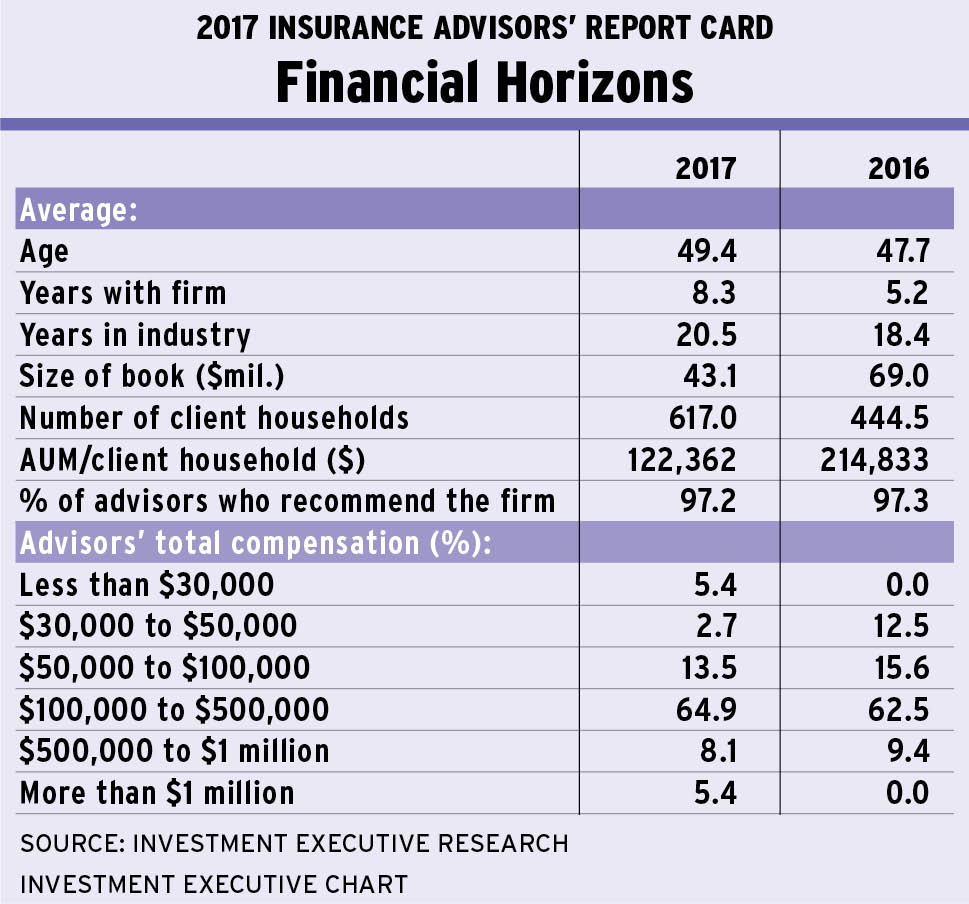
Financial Horizons
With 20.5 years of industry experience, the average Financial Horizons advisor is in line with the industry average of 20.3 years of experience. At the same time, these advisors are also a little younger than average, at 49.4 years old vs 51.8 years of age. Almost two-thirds of the managing general agency’s (MGA) reps in report that they’re earning between $100,000 and $500,000 a year, more than 20% are earning less than $100,000 a year, with the remainder in the industry’s top-earning categories.
Author: James Langton Source: Investment Executive Research Copyright: Investment Executive
Unique differences among insurance firms’ advisors
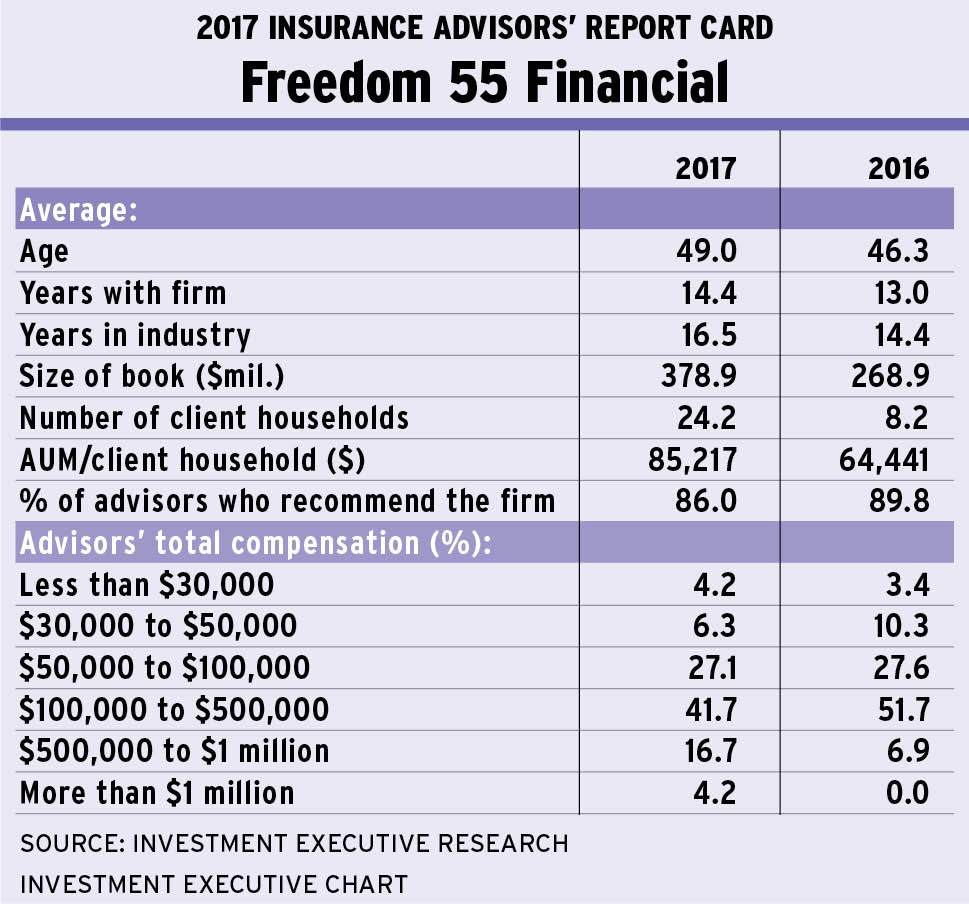
Freedom 55 Financial
The sales force at Freedom 55 is one of the most diverse in terms of reported compensation, according to results of IE’s survey. Notably, the firm has reps who are in the very highest and the very lowest income categories — as well as everywhere in between. For example, the data show that 4.2% of Freedom 55 advisors are earning more than $1 million a year while the same proportion of advisors is earning less than $30,000 a year. The firm’s advisors are also slightly younger than industry average, at 49 years of age, and they also report a below average 16.5 years of industry experience.
Author: James Langton Source: Investment Executive Research Copyright: Investment Executive
Unique differences among insurance firms’ advisors
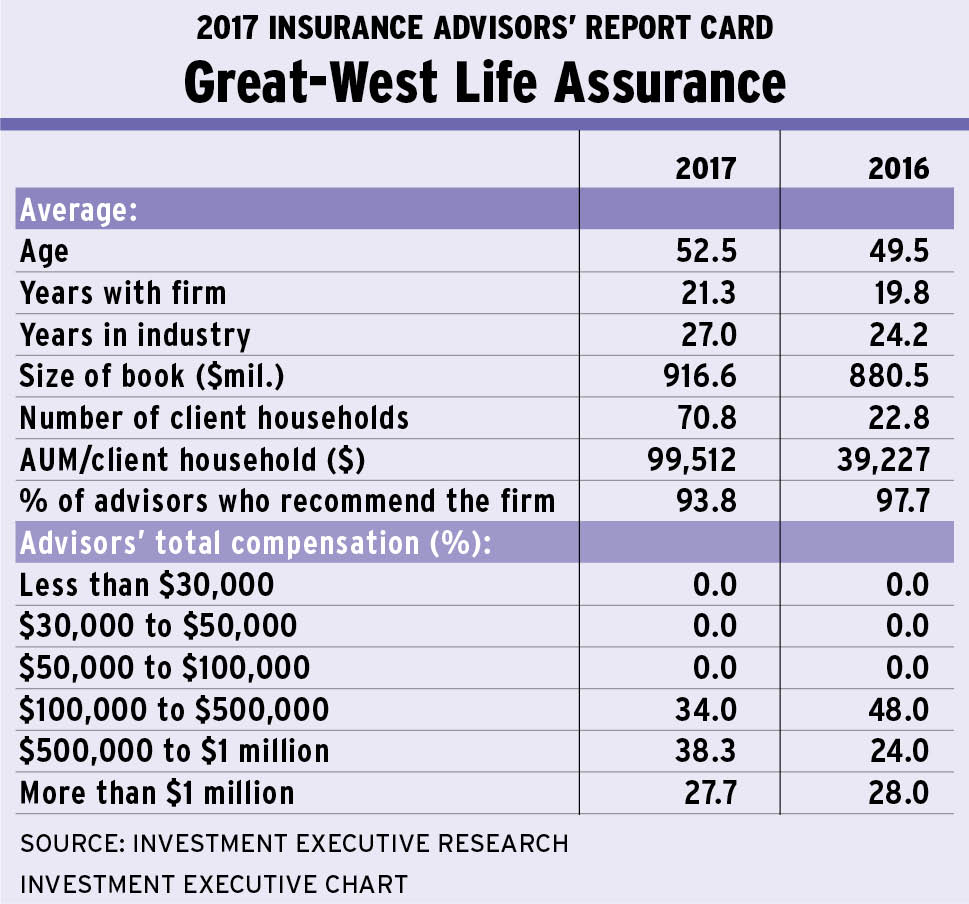
Great-West Life Assurance
Advisors with Great-West Life Assurance’s (GWL) Gold Key distribution network are some of the best paid in the insurance industry. IE’s surveys for each of the past two years reveal that the entire GWL sales force reports that it’s earning at least $100,000 a year. Indeed, almost one-third of reps claim to be earning at least $1 million a year. This high level of compensation follows from the fact that it’s also one of the industry’s most experienced sales forces, with an average age of 52.5 years old and an average 27 years of industry experience.
Author: James Langton Source: Investment Executive Research Copyright: Investment Executive
Unique differences among insurance firms’ advisors
Hub Financial
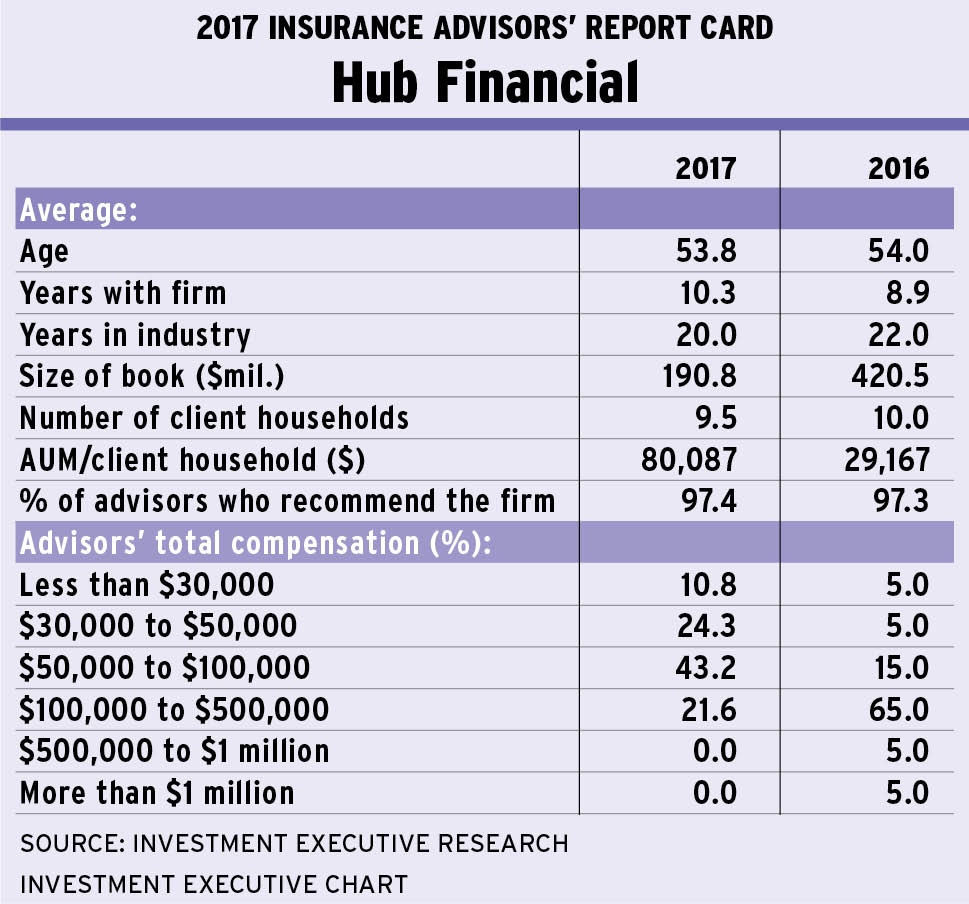
The data on Hub Financial’s sales force suggests that many of the MGA’s advisors come to the insurance industry at a slightly later stage of their working life. Case in point: the average age of Hub advisors in IE’s survey is 53.8 years old, which is above the industry average. Yet, the average industry tenure is in line with the overall average, at about 20 years, suggesting that many of Hub’s advisors joined the business in their early 30s. For these reps, the investment aspect of the industry appears to be very much a secondary consideration, as average assets under management (AUM) are only $9.5 million.
Author: James Langton Source: Investment Executive Research Copyright: Investment Executive
Unique differences among insurance firms’ advisors
IDC WIN
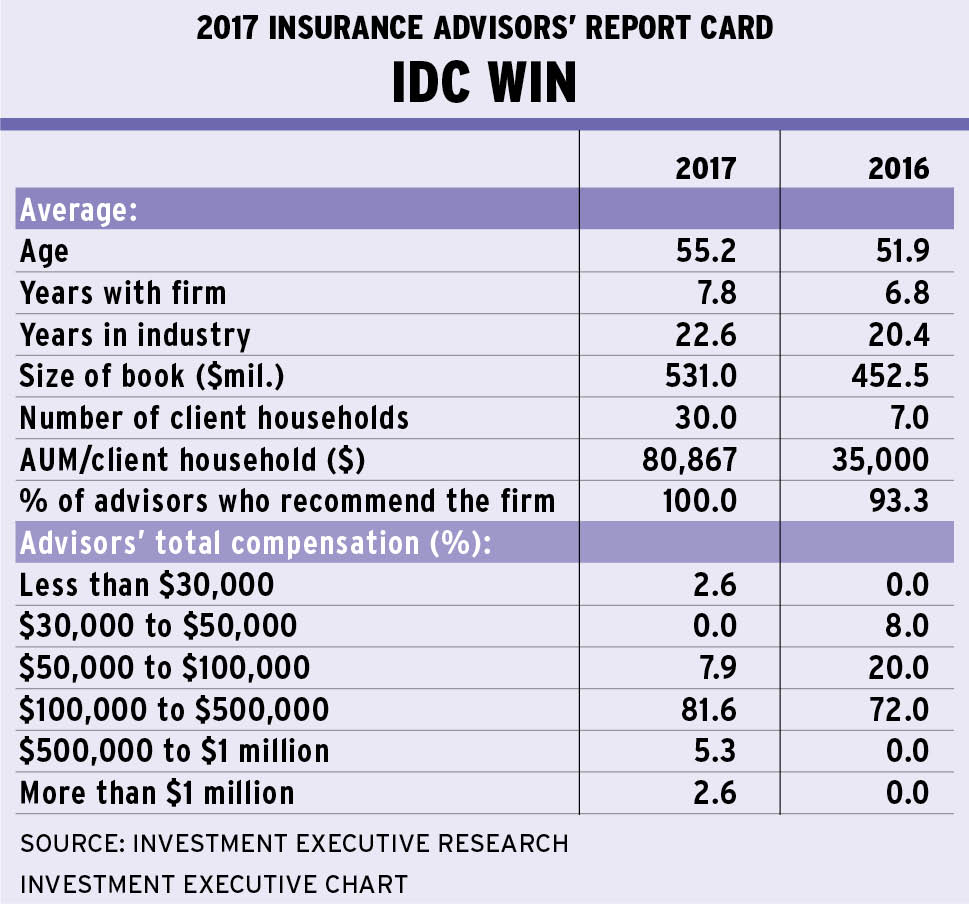
Advisors with IDC Worldsource Insurance Network (IDC WIN) report some year-over-year growth in their AUM — and this appears to be showing up on the bottom line for many of them. In fact, 81.6% of the IDC WIN advisors are earning between $100,000 and $500,000 a year. In addition, 7.9% of IDC WIN reps are earning more than $500,000 whereas none of the firm’s reps reported generating in excess of $500,000 a year in last year’s Report Card.
Author: James Langton Source: Investment Executive Research Copyright: Investment Executive
Unique differences among insurance firms’ advisors
PPI Advisory
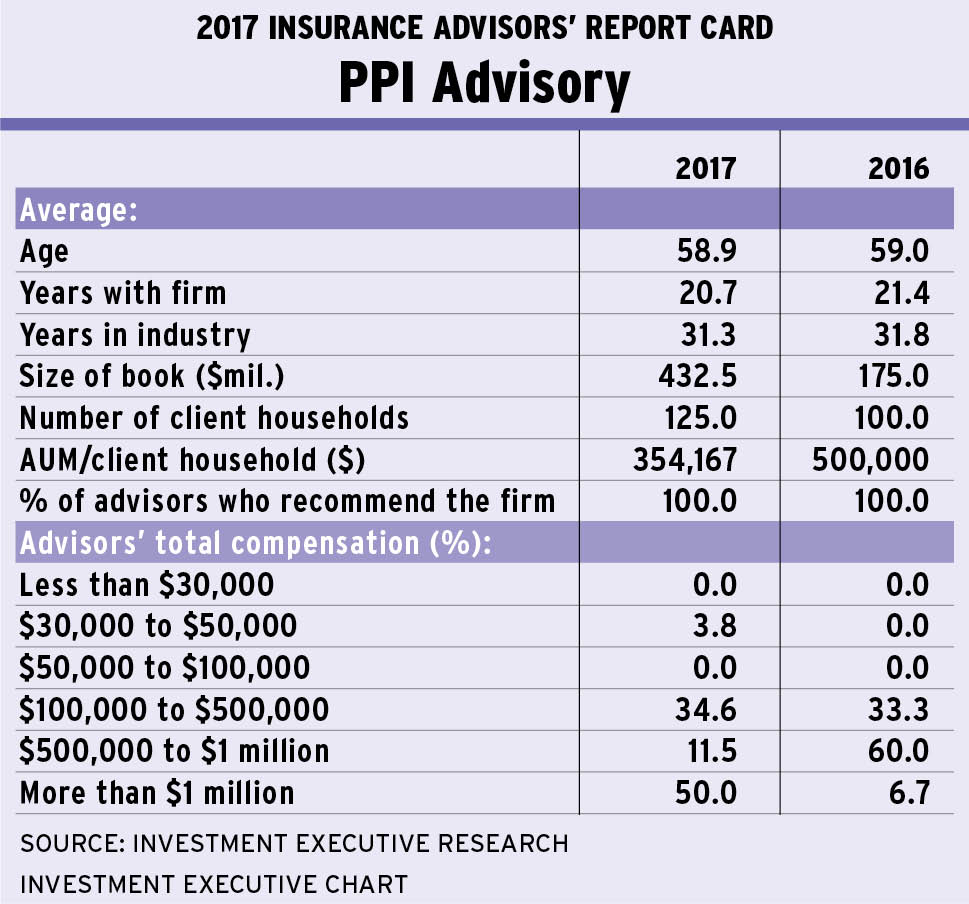
The reps at PPI Advisory are some of the oldest and most well paid in IE’s survey. The vast majority of the firm’s advisors, who cater to high net-worth clients, indicate that they’re earning at least $100,000 a year — and fully half of them claim to be making more than $1 million. Although PPI Advisory’s reps report very large investment books, this is based on just a handful of responses. More important than this is the fact the average PPI Advisory rep has been building an insurance practice for more than 30 years.
Author: James Langton Source: Investment Executive Research Copyright: Investment Executive
Unique differences among insurance firms’ advisors
PPI Solutions
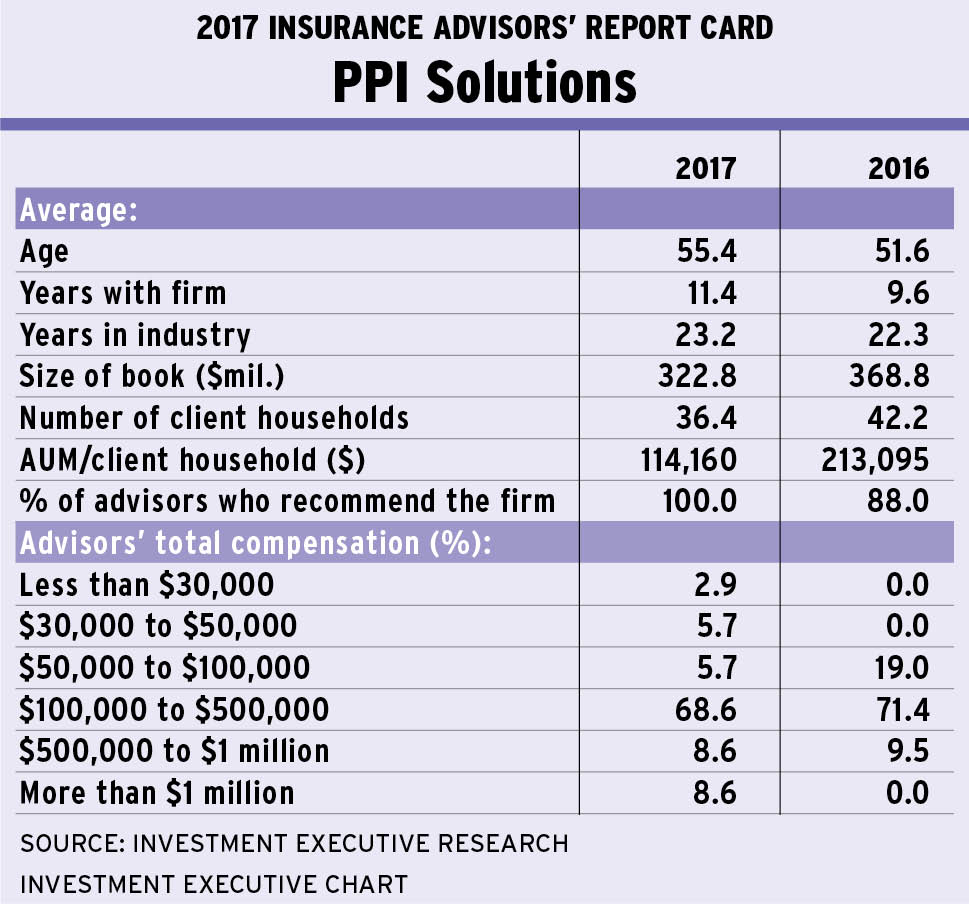
The sales force at PPI Solutions appears resolutely middle class compared with its counterpart at sister firm PPI Advisory. More than two-thirds of the firm’s reps report that they’re earning between $100,000 and $500,000 a year. Only 17.2% of the firm’s reps are making more, and even fewer, 14.3%, are earning less. These reps are also notably younger and less experienced than the reps at PPI Advisory.
Author: James Langton Source: Investment Executive Research Copyright: Investment Executive
Unique differences among insurance firms’ advisors
RBC Life Insurance
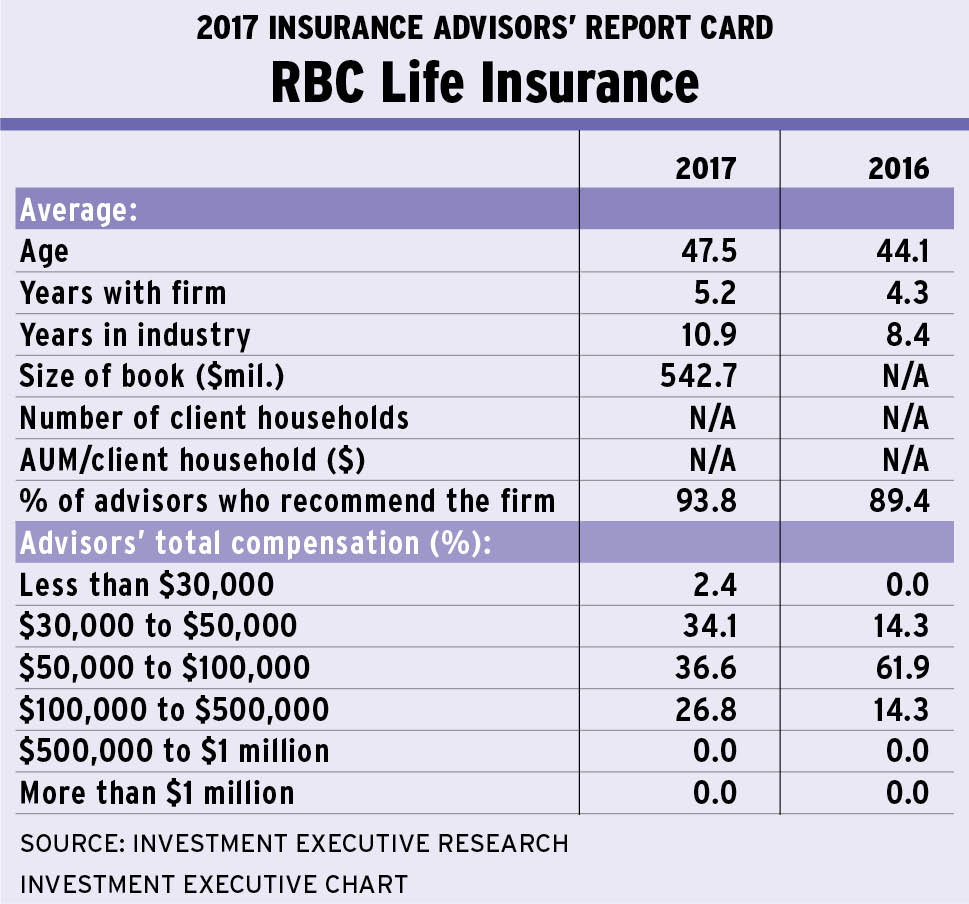
Insurance advisors with RBC Life Insurance are relatively green compared with the sales forces at many of the independent firms. IE’s survey found that the average rep at RBC Life has only been in the business for 10.9 years compared with upward of 30 years at some of the firms in the Report Card. This lack of experience translates into notably lower compensation compared with some of the competition, as more than two-thirds of RBC Life advisors report that they’re earning less than $100,000 a year.
Author: James Langton Source: Investment Executive Research Copyright: Investment Executive
Unique differences among insurance firms’ advisors
Sun Life Financial (Canada)
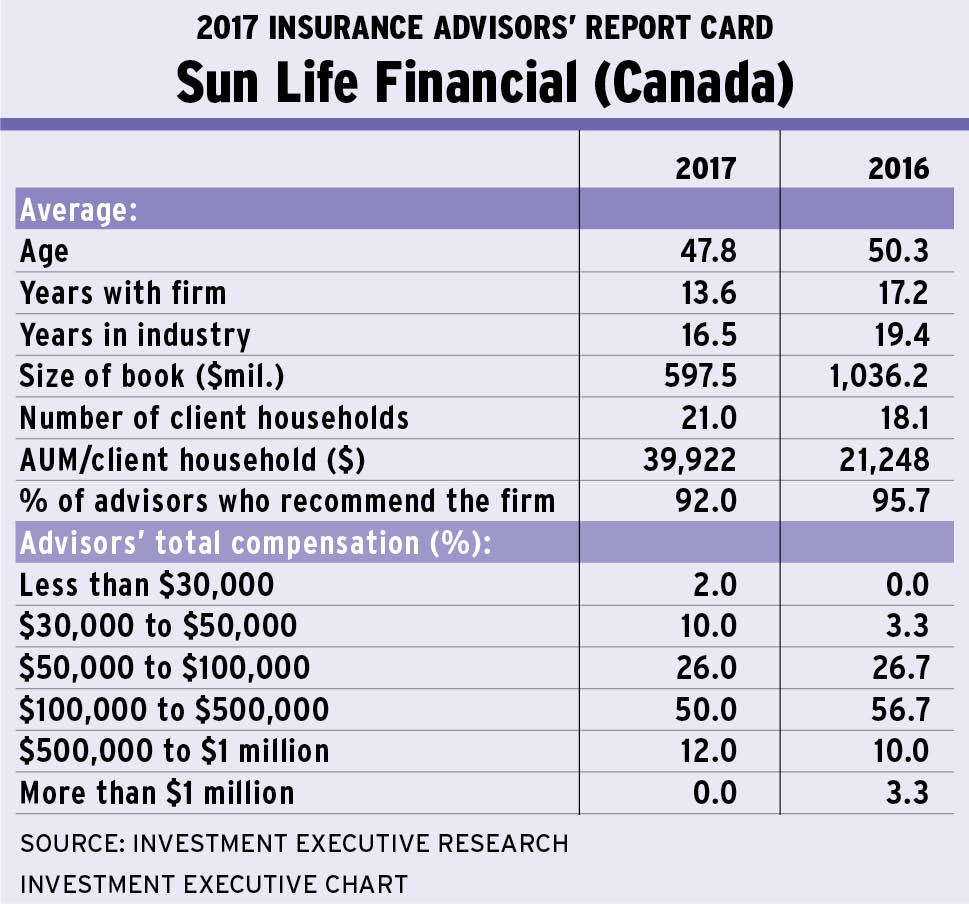
The sales force at Sun Life Financial (Canada) stands alone as the only one in the Report Card that appears to be getting younger. Last year, the average age of the firm’s reps was 50.3 years of age, which was in line with the industry average of 49.3 years. For 2017, the average age of Sun Life advisors has dropped to 47.8 years of age, which makes it the only firm reporting a meaningful decline. This drop in age is accompanied by a decline in average industry experience and a modest shift to lower annual compensation.
Author: James Langton Source: Investment Executive Research Copyright: Investment Executive