Slideshow: Taking stock of each brokerage’s average advisor
Although advisors with bank-owned firms have bigger books and greater productivity on average than those with independent dealers, advisors with independent dealers are more likely to recommend their firms
Investment Executive is drilling deeper into this year’s Brokerage Report Card research by exploring the differences between the average investment advisors at the 12 brokerage firms included in the Report Card.
Although these data provide greater insight into the demographic profiles of each firms’ advisors, they should also be read with caution because of the relatively low sample sizes that result from zeroing in on individual firms. This is exacerbated when exploring the average advisor information at the smaller firms, for which the sample is even more constricted, and in distinguishing the top 20% of advisors, based on assets under management (AUM) per client household, from the remaining 80% of the advisor population.
With that caveat, the numbers do help reveal differences in the advisors with various types of firms. On average, advisors with bank-owned firms have bigger books and greater productivity, in terms of AUM/client household. Yet, these advantages don’t necessarily translate into happier advisors as the brokers at the regional and national independent dealers are, in general, more likely to recommend their firms even though they tend to have smaller books of business and lower compensation levels.
View the slideshow to explore the average advisor data for each firm:
Taking stock of each brokerage’s average advisor
Taking stock of each brokerage’s average advisor
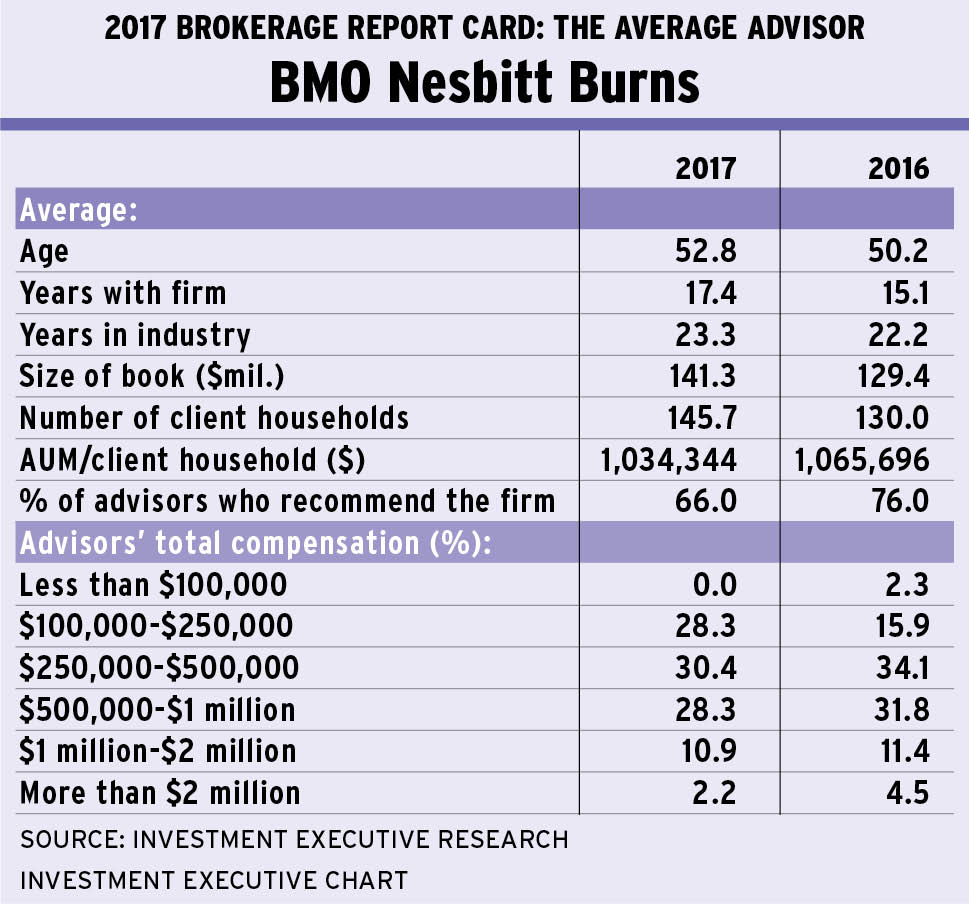
BMO Nesbitt Burns Inc.
Nesbitt advisors’ productivity appears rather stagnant over the past year. Although average AUM rose year-over-year, so too did the number of client households Nesbitt advisors serve. This results in the average productivity remaining flat from 2016. Nesbitt advisors’ satisfaction with the bank-owned dealer appears to have declined along with this lull in productivity as they pointed to their firm becoming more and more a part of its parent, Bank of Montreal, as a major reason for their frustration.
Author: James Langton Source: Investment Executive Research Copyright: Investment Executive
Taking stock of each brokerage’s average advisor
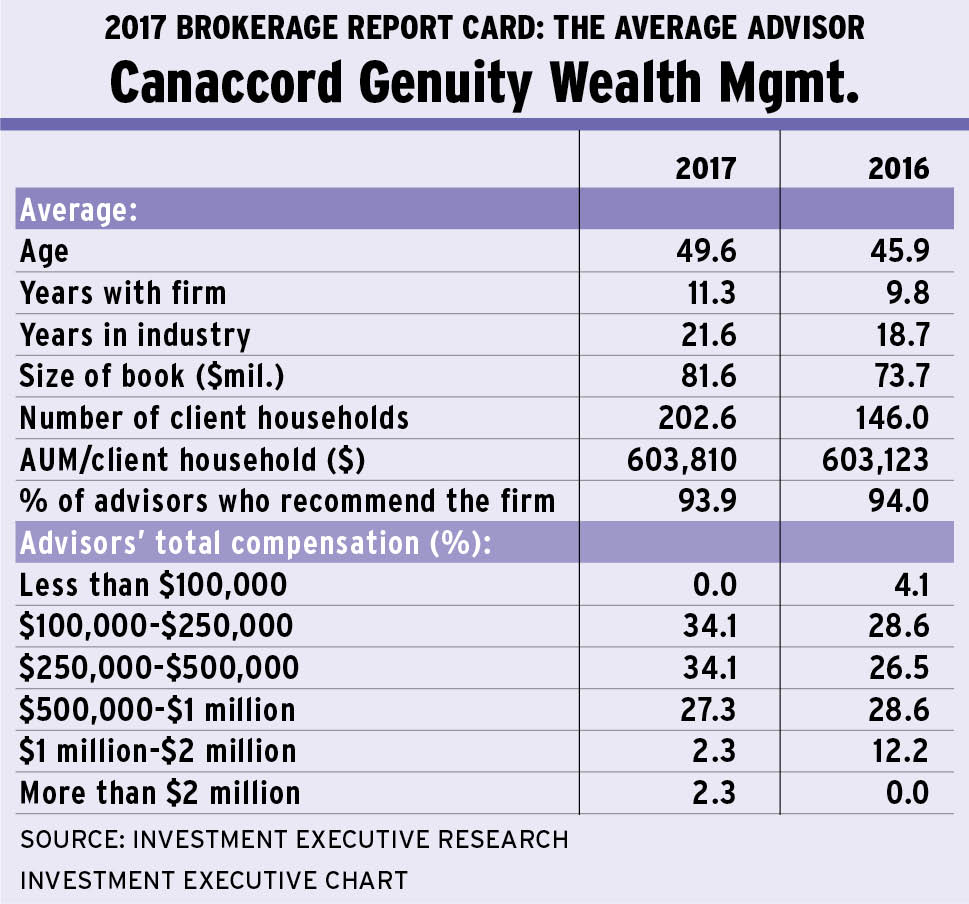
Canaccord Genuity Wealth Management (Canada)
One of the most notable results from this year’s Report Card data was the big jump in the average age of Canaccord advisors, to 49.6 years of age from 45.9 years old last year. Canaccord advisors also saw average assets under management (AUM) climb year-over-year, but the average number of client households also rose, keeping average productivity flat from the previous year.
Author: James Langton Source: Investment Executive Research Copyright: Investment Executive
Taking stock of each brokerage’s average advisor
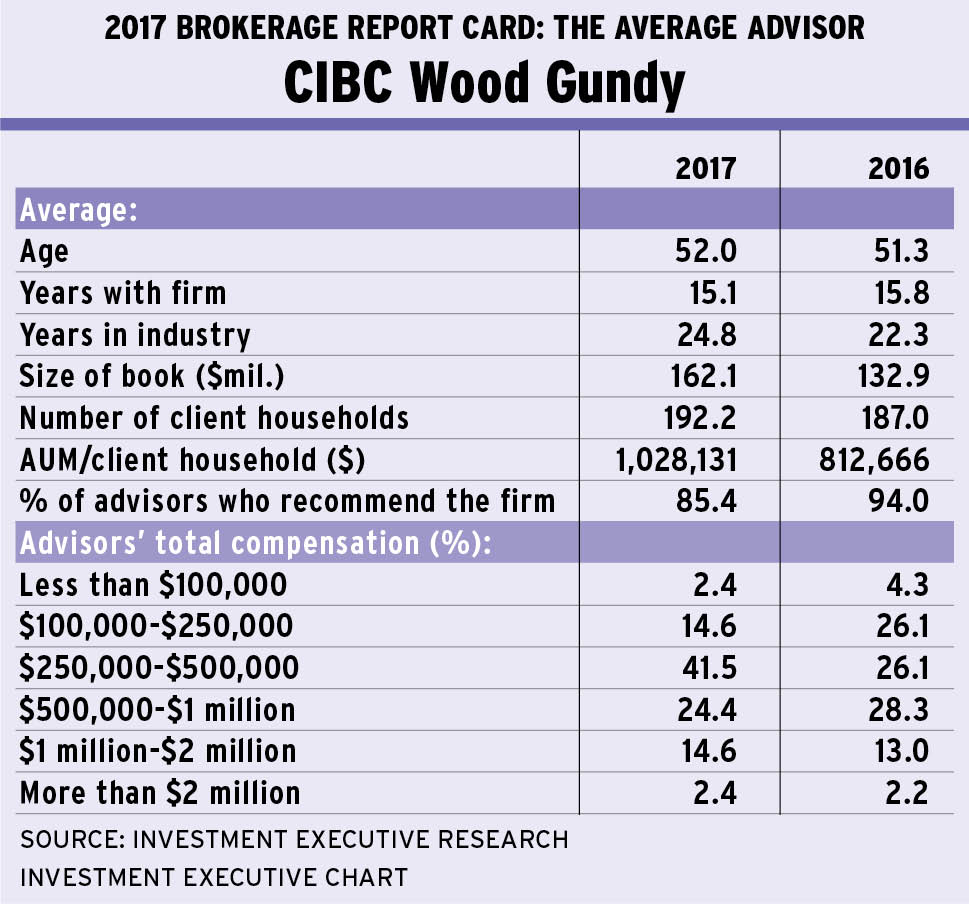
CIBC Wood Gundy
Wood Gundy advisors enjoyed solid gains in AUM and higher productivity, which translated into higher compensation. The ranks of lower-paid Wood Gundy advisors declined while the proportion of advisors who report earning between $250,000 and $500,000 annually is on the upswing. Still, the percentage of Wood Gundy advisors who recommended their firm dipped to 85.4% from 94% year-over-year.
Author: James Langton Source: Investment Executive Research Copyright: Investment Executive
Taking stock of each brokerage’s average advisor
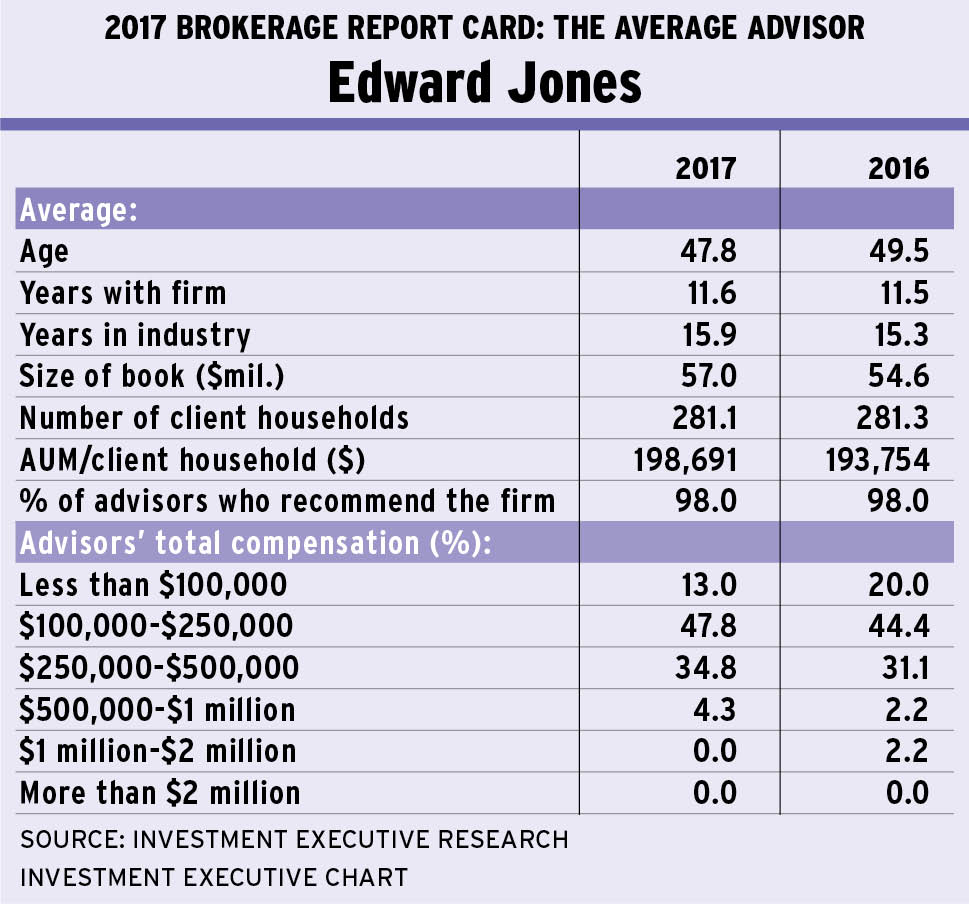
Edward Jones
Although Edward Jones’ advisors run smaller businesses than many of their counterparts at the big Bay Street firms, every rep surveyed for this year’s Report Card recommended the firm. Edward Jones’ advisors had the highest average number of client households, but they tended to have smaller books of business in terms of AUM, which translated into relatively low productivity.
Author: James Langton Source: Investment Executive Research Copyright: Investment Executive
Taking stock of each brokerage’s average advisor
Leede Jones Gable Inc.
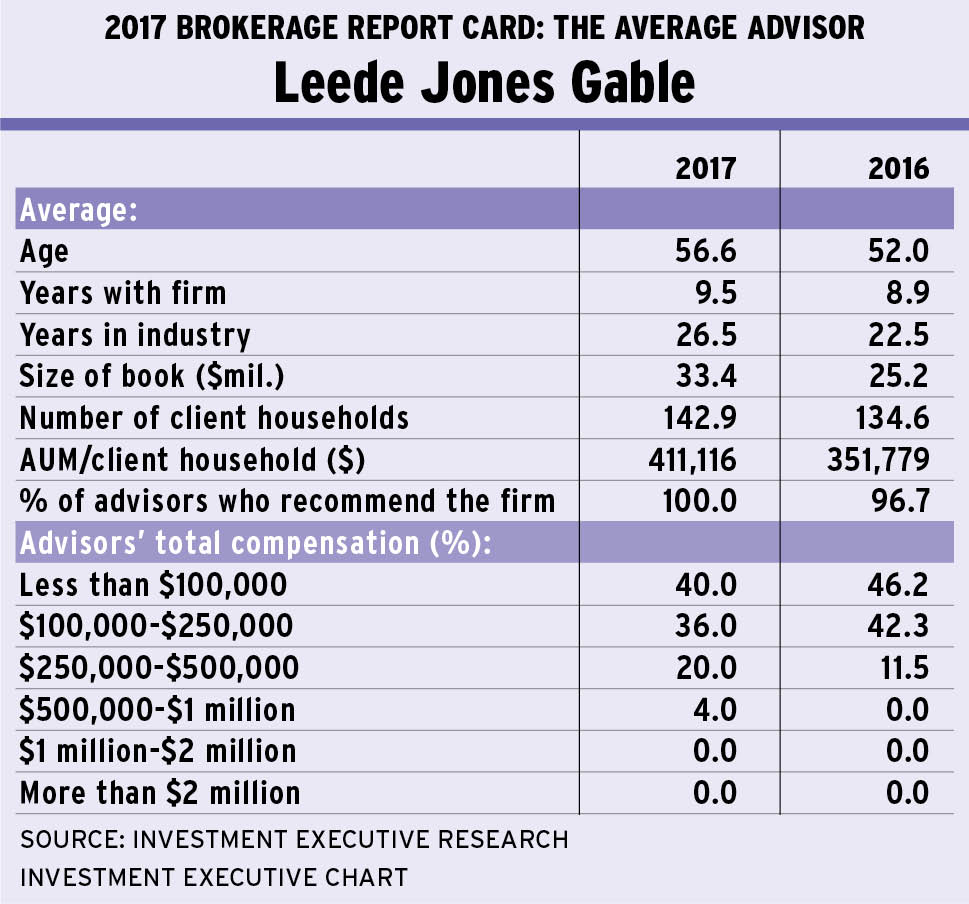
These advisors are some of the most experienced in the business. This year, the average age of the Leede advisors surveyed jumped to 56.6 years from 52 years of age in 2016, and average tenure in the industry rose similarly, to 26.5 years in the business from 22.5 the previous year. Despite advisors’ edge in experience, their books aren’t nearly as big as their rivals at some of the larger firms and their pay isn’t as good. Yet, every single Leede advisor recommends the firm.
Author: James Langton Source: Investment Executive Research Copyright: Investment Executive
Taking stock of each brokerage’s average advisor
National Bank Financial Ltd.
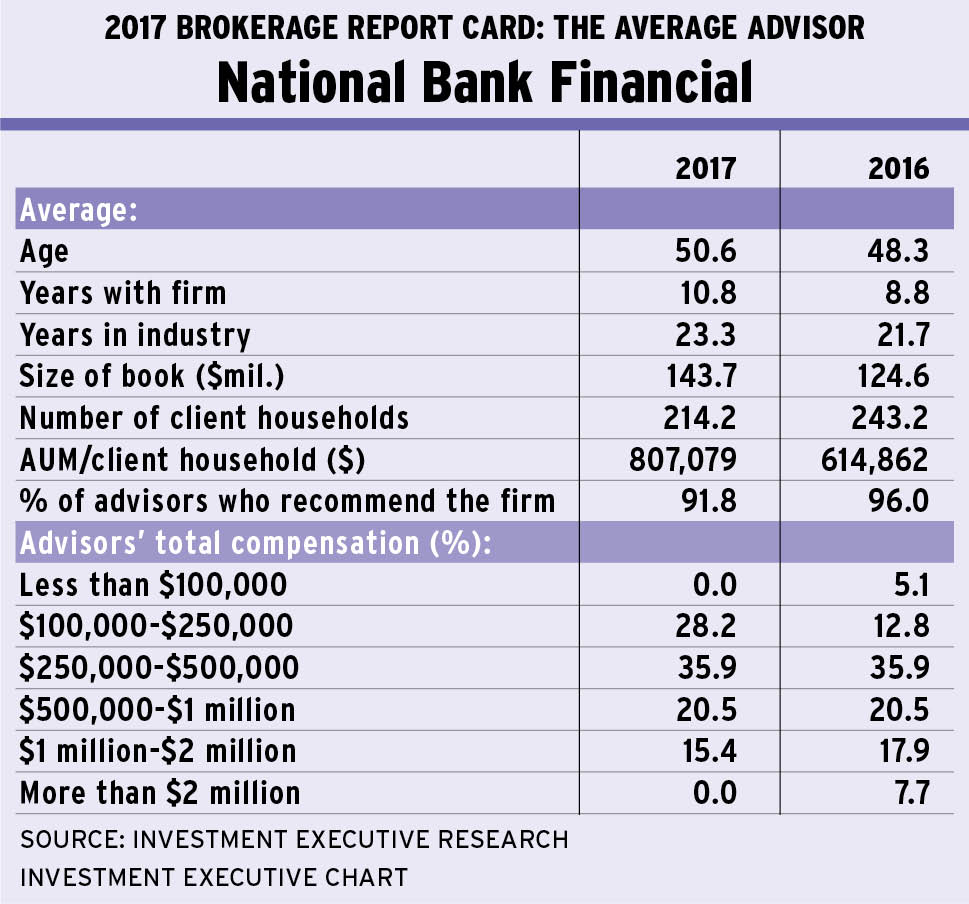
National Bank Financial (NBF) advisors report well above-average gains in productivity this year; although their AUM grew in line with the industry, overall, they also reduced the number of client households they serve, thereby boosting productivity.
Author: James Langton Source: Investment Executive Research Copyright: Investment Executive
Taking stock of each brokerage’s average advisor
Odlum Brown Ltd.
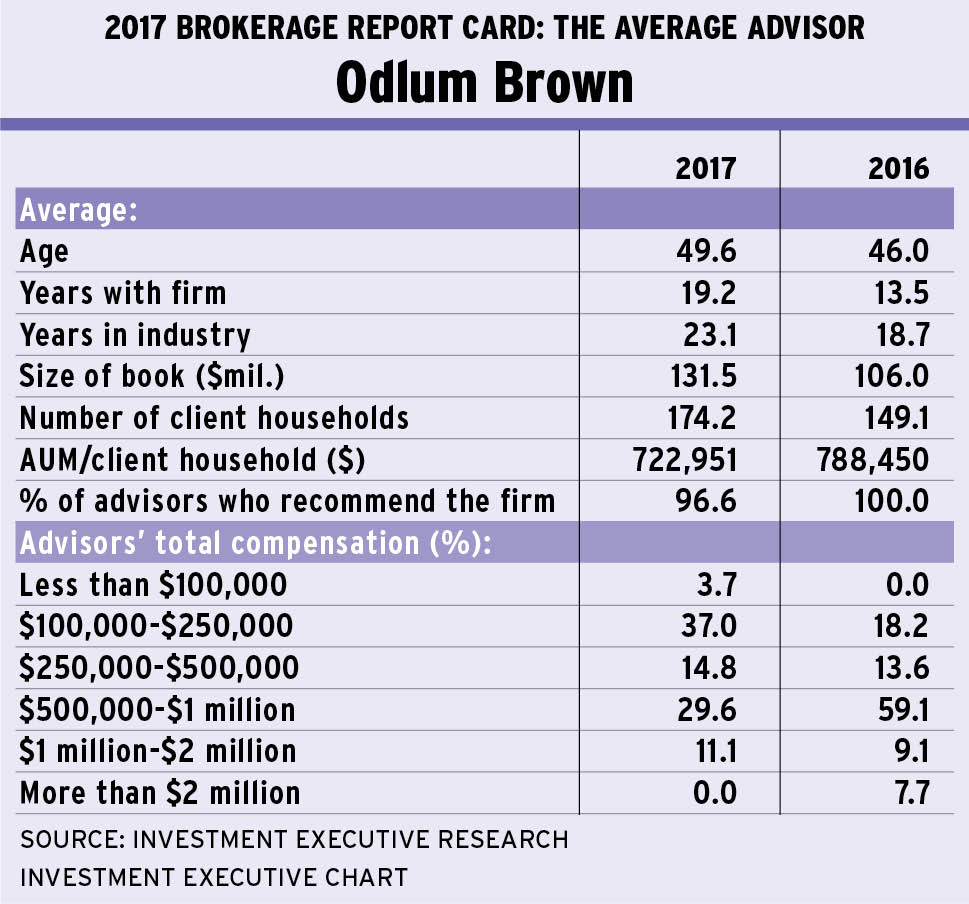
Average AUM grew strongly among Odlum Brown advisors this past year, but the average number of client households they serve also rose, which kept them from generating overall gains in productivity.
Author: James Langton Source: Investment Executive Research Copyright: Investment Executive
Taking stock of each brokerage’s average advisor
Raymond James Ltd.
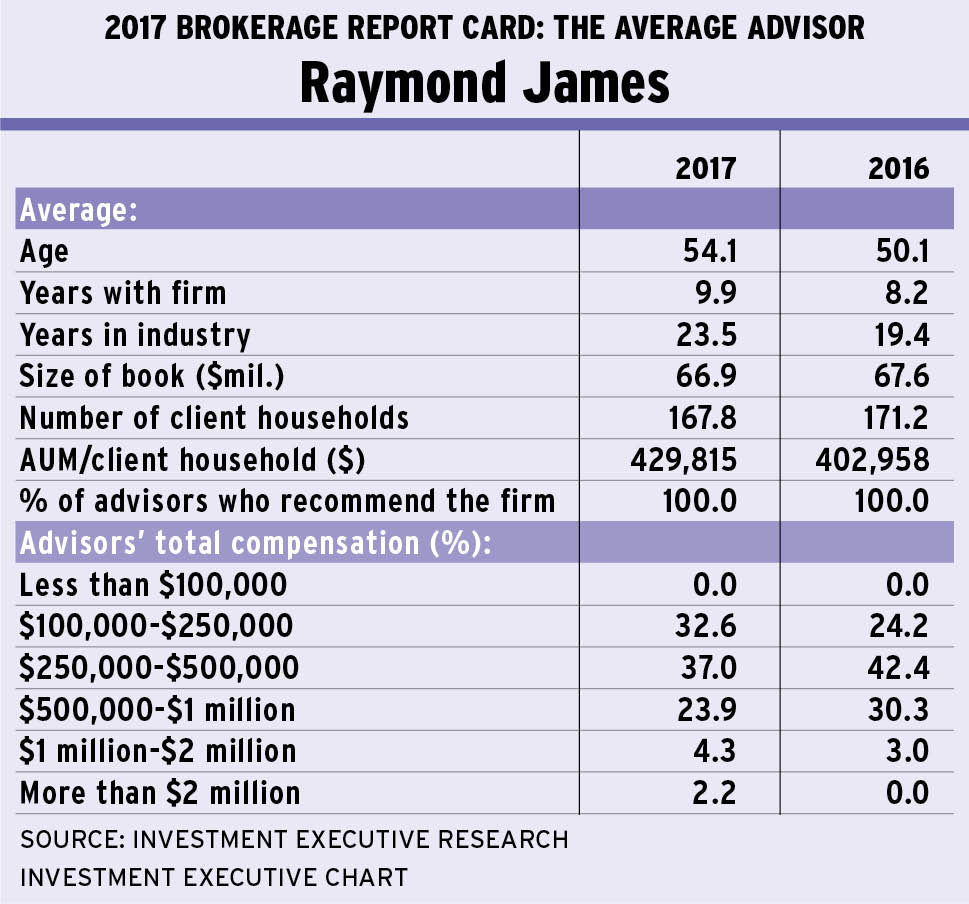
Raymond James’ advisors got notably older this year, with the average age jumping to 54.1 years from 50.1 years of age in 2016. At the same time, average AUM and the number of client households were virtually unchanged from the previous year. Nevertheless, Raymond James advisors’ satisfaction with their firm remains extremely high as all surveyed recommend their firm.
Author: James Langton Source: Investment Executive Research Copyright: Investment Executive
Taking stock of each brokerage’s average advisor
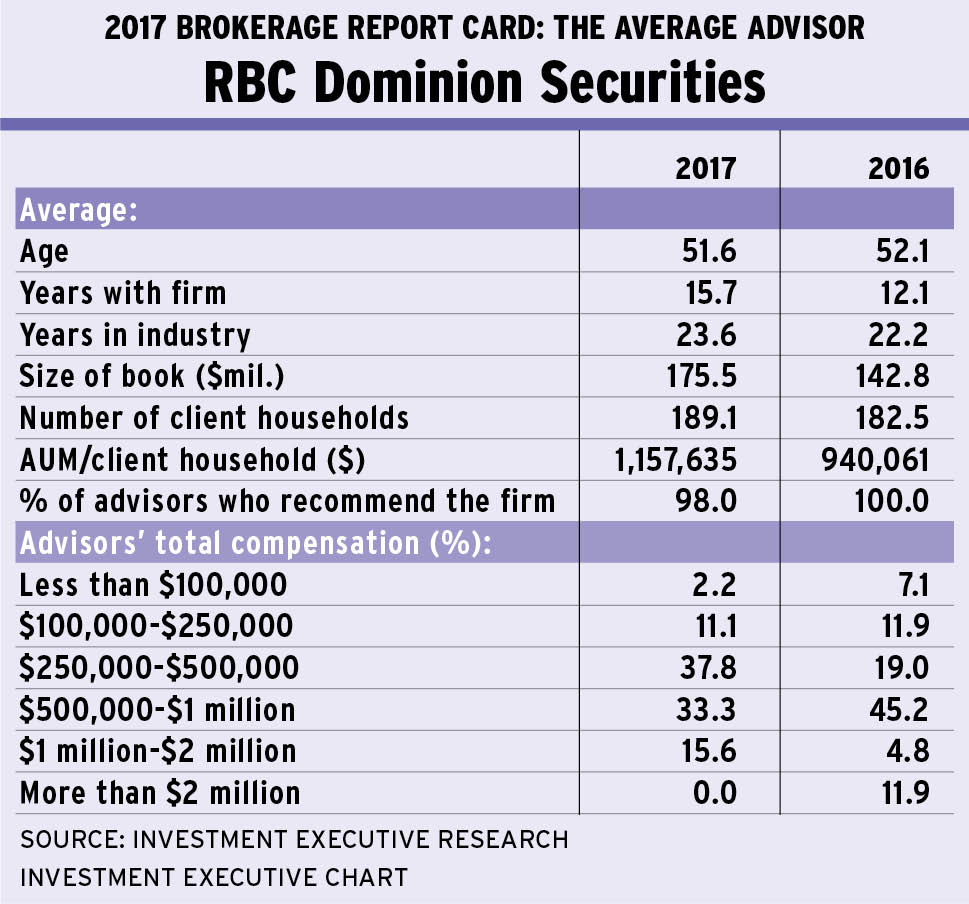
RBC Dominion Securities Inc.
Advisors’ productivity surged impressively at DS on the strength of an above-average increase in AUM and little change in their number of client households. Almost all of these gains came from the firm’s top performers, which saw significant jumps in AUM and productivity compared with the previous year.
Author: James Langton Source: Investment Executive Research Copyright: Investment Executive
Taking stock of each brokerage’s average advisor
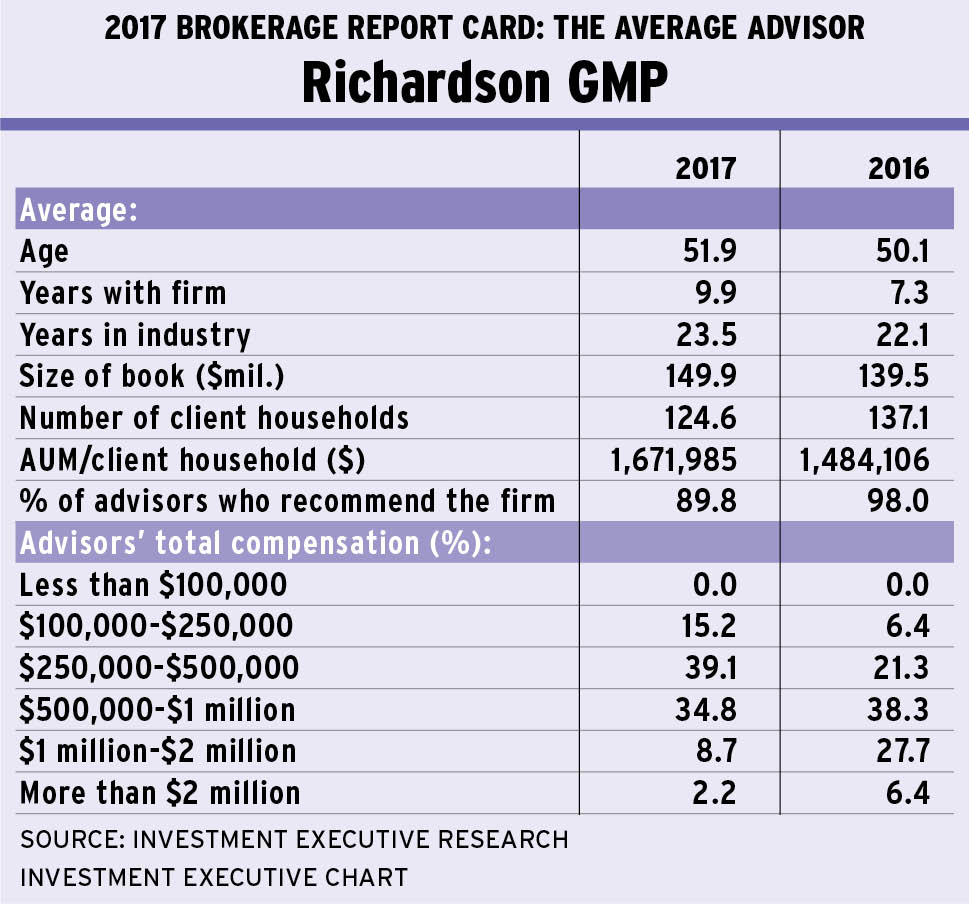
Richardson GMP Ltd.
Richardson GMP’s advisors are among the most prosperous on the Street, surpassing those at the big bank-owned firms. Although their average AUM and productivity both increased this year, fewer advisors would recommend this firm as 89.8% said they would this year vs 98% last year.
Author: James Langton Source: Investment Executive Research Copyright: Investment Executive
Taking stock of each brokerage’s average advisor
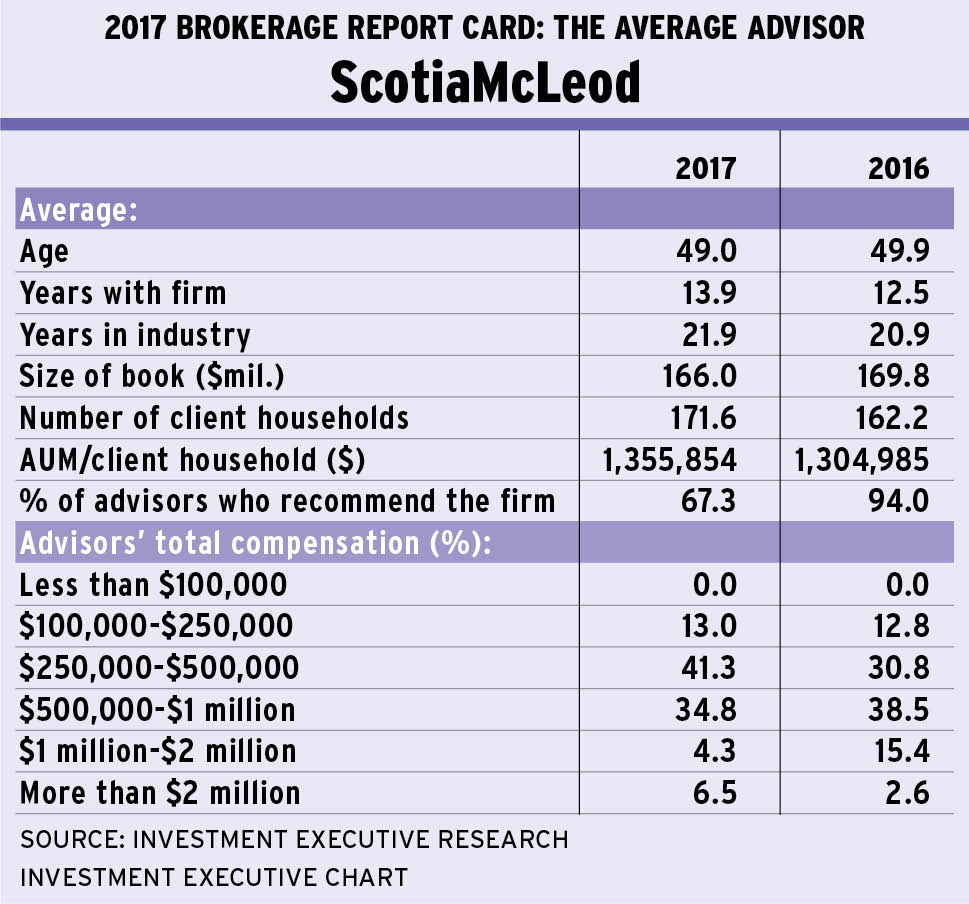
ScotiaMcLeod Inc.
Advisors’ satisfaction with ScotiaMcLeod plunged this year, with only about 67.3% of advisors saying they would recommend the firm, down significantly from 94% a year ago. This decline came as a result of advisors’ dissatisfaction with the firm in the wake of layoffs last year. At the same time, these advisors’ AUM and productivity was more or less unchanged from 2016.
Author: James Langton Source: Investment Executive Research Copyright: Investment Executive
Taking stock of each brokerage’s average advisor
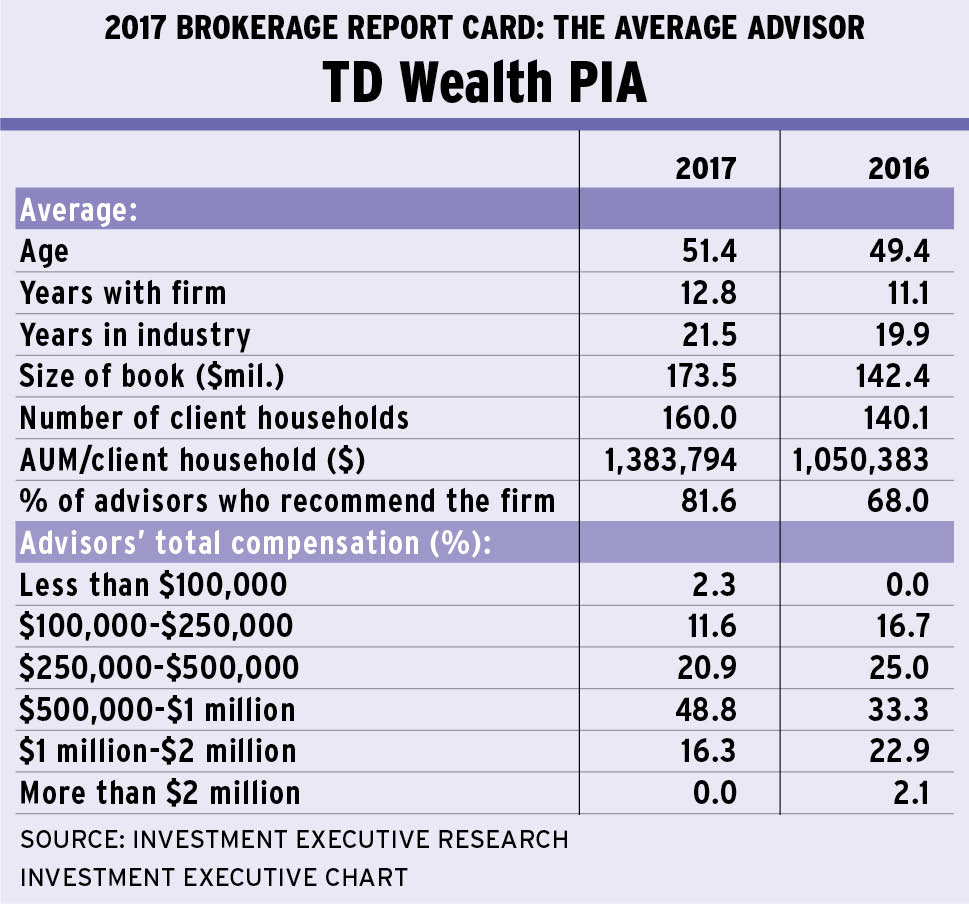
TD Wealth Private Investment Advice
TD Wealth PIA advisors were happier compared with a year ago, as the percentage of advisors who recommended the firm has risen to 81.6% from just 68% last year. Although this year’s metric lags the industry average of 88.5%, it nonetheless suggests that things are headed in the right direction as TD Wealth PIA advisors’ average productivity was up impressively on the strength of above-average growth in AUM.
Author: James Langton Source: Investment Executive Research Copyright: Investment Executive