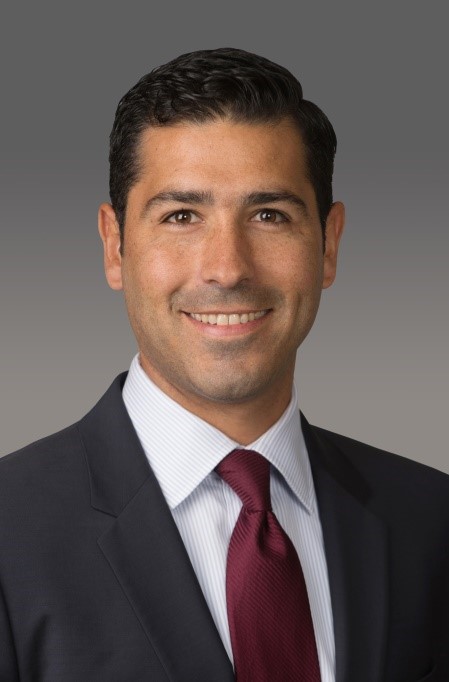

Welcome to Soundbites, weekly insights on market trends and investment strategies, brought to you by Investment Executive and powered by Canada Life. For today’s Soundbites, we’re talking about ESG with Juan Lois, executive director and lead strategist (Americas) on the sustainable investment team with J.P. Morgan Asset Management, a subadvisor to Canada Life. We talked about the drivers of ESG investing, the balance between ESG concerns and fiduciary responsibility, and we started by asking how investor concerns are evolving.
Juan Lois (JL): The sustainable investing industry is in a constant state of evolution, with the issues of focus varying by investor, geographic location, and changing over time. Clients of asset managers are investors that have different objectives, with some concerned only with financial returns, while others have non-financial objectives as well. The transition to a low-carbon economy and the risks it presents is one of the greatest areas of focus for investors – both sustainability-driven and traditional alike. Companies around the world are increasing their adoption of clean technologies, embracing carbon-reduction targets, and enhancing the disclosures of their business’ environmental footprint — all of which can and is impacting their ability to successfully generate returns amongst an increasingly challenging and competitive landscape. But the clean energy transition is complex. Actions taken by companies to mitigate risk and take advantage of opportunities with respect to managing physical and transition risks associated with climate change may also raise financially material social concerns. This is because many of the newer greener technologies being developed require substantial inputs of a variety of materials, often found in only a few places around the world, which are often challenged by human rights and labour issues. As the low-carbon transition accelerates, the extent to which an industry or company is managing financially material social risks and opportunities is becoming increasingly important to long-term investors.
On fiduciary responsibility
JL: The question suggests that ESG concerns are somehow separate from fiduciary responsibility. But for clients that have financial objectives, integration and consideration of financially material ESG factors in the investment process is part of managing assets in the best long-term economic interests of our clients. We call this ESG integration, and when companies and other security issuers manage these factors well, they are more likely to be efficient, less exposed to regulatory and reputational risk, and offer opportunities for our client portfolios. As a result, we believe assessing financially material ESG considerations in the investment decision-making process strengthens risk management and may contribute to long-term financial returns. We believe this is wholly consistent with our fiduciary obligations. While there are some misconceptions still, investors are increasingly understanding that there is a difference between different types of dedicated sustainable strategies, such as those targeting innovative solutions with the potential to benefit from the transition to a more sustainable future, and those strategies that exclude companies purely based on values or political views.
Drivers impacting ESG investing
JL: The growth of ESG investing comes against the backdrop of massive economic change. From the way in which people communicate with each other, to the way in which products are created that support and improve our lives, several long-term secular trends are transforming the way in which the global economy works. Some of these changes are positive shifts that are revolutionizing the very way we’re able to think about the world. At the same time, there’s been a rise in green and sustainable policies, with Europe leading the way. We expect to see a similar alignment in the major Asian markets, which will serve as a critical catalyst in driving the growth of the sustainable investing market in the region. In the U.S., recent policy measures such as the Inflation Reduction Act mean that tangible and attractive investment opportunities can be expected to encourage companies and investors to redirect capital to domestic manufacturing and leading technologies such as carbon capture and storage, hydrogen, and many others.
And finally, what is the bottom line on ESG investing in the current moment?
JL: Clients have different reasons for incorporating ESG considerations in the investment process. Some are focused purely on financial returns, while others have non-financial goals as well. It’s important to understand these goals, as asset managers develop investment strategies in response to client demand.
Well, those are today’s Soundbites, brought you by Investment Executive and powered by Canada Life. Our thanks again to Juan Lois of J.P. Morgan Asset Management, a subadvisor to Canada Life. Visit us at investmentexecutive.com, where you can sign up for our a.m. newsletter and never miss another Soundbite. Thanks for listening.
**
Go back to the article.