


Funds
Fonds
(Runtime: 5:00. Read the audio transcript.)
**
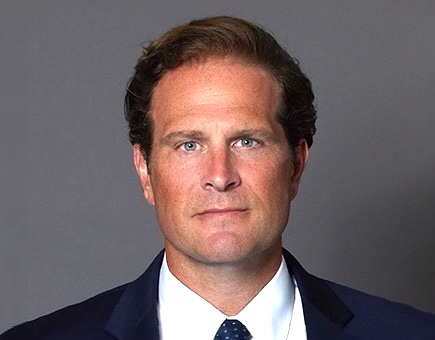
Stock market gains and swelling investor excitement seem to belie the potential for future volatility and supply issues, says Vince Childers, head of real assets multi-strategy with Cohen & Steers.
“There’s a lot of exuberance baked in at this point,” he said. “I think what that has caused a lot of market participants to overlook are some growing near-term cyclical or growth risks.”
Childers said real assets — such as global listed infrastructure, resource equities, commodities futures and global real estate — tend to be a hedge against market swings, and could serve investors well if a soft landing proves more difficult than anticipated.
“Historically, the kind of environment where you have inflation surprises to the upside and growth to the downside — more of the supply driven type of inflation — has favoured real assets significantly,” he said.
Childers said much of the current exuberance can be chalked up to artificial intelligence–driven performance from the Magnificent Seven: Apple, Microsoft, Alphabet, Amazon, Nvidia, Meta Platforms and Tesla.
“We have a lot of market participants, a lot of investors, really enthralled with the AI investment story and the anticipated payoffs around it,” he said. “It’s clear that this is where investor attention is really focused.”
He draws a comparison between the “AI fever” propelling today’s market and the technology, media and telecom bubble of the late 1990s, which featured the same investor excitement and elevated Shiller price-to-earnings levels.
The current cyclically adjusted P/E ratio hovers around 35x. It was 43x at the peak of the tech bubble in January 2000. The difference now, however, is the underlying fundamentals of the Magnificent Seven are much stronger.
“These businesses are less speculative and have better fundamentals than some of the things that we saw back then,” he said.
Nevertheless, Childers is taking a more defensive posture because of potential supply side concerns that could develop over the next decade or so.
“There seems to be very little appreciation for that risk baked into market prices,” he said. “It’s something that we’ve characterized in some of our publications as ‘an era of scarcity.’”
With slowing globalization and declining global labour arbitrage, he anticipates labour issues. Furthermore, he has identified “a substantial commodity underinvestment cycle” that could lead to future supply constraints.
“There’s a whole host of forces that we think could make the next decade look nothing like the pre-Covid decade, and that could have, at worst, stagflationary type of dynamics in them,” he said.
One example is how the overinvestment in energy projects a decade ago has given way to much greater capital discipline and potential underinvestment in energy exploration and production.
“It’s been very difficult for a lot of energy companies to get the type of capital investment they would need to engage in the next cycle,” he said. “We actually need the production to meet global energy needs over the next 10, 15, even 20 years.”
The concern is particularly stark because energy production cannot be ramped up quickly.
“You could very easily end up in a situation of undersupply and chronic undersupply,” he said. “Historically, adverse energy supply shocks have created tremendous stagflationary dynamics.”
In his portfolio, he is currently overweight listed infrastructure and resource equities, and underweight commodities futures and global real estate.
“I think it’s likely that in this portfolio, barring some pretty large moves, we’ll be overweight infrastructure probably for a good long while,” Childers said.
**
This article is part of the Soundbites program, sponsored by Canada Life. The article was written without sponsor input.