
Welcome to Soundbites, weekly insights on market trends and investment strategies, brought to you by Investment Executive and powered by Canada Life.
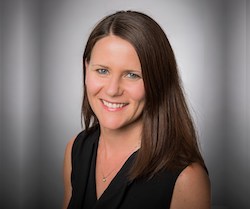
For today’s Soundbites, we’re talking with Kathrin Forrest, investment specialist with Capital Group about the global economy in the current moment. We talked about the ongoing recession-watch, and where she sees opportunities. And we started by asking how she would describe the current economic moment.
Kathrin Forrest (KF): Data have been quite mixed, in a way letting everybody see what they want to see. On the one hand, in Canada and the U.S., consumer spending remains strong despite rate hikes. On the other hand, the yield curve remains deeply inverted. And over the past 40 years or so, that’s been a pretty reliable indicator of a recession. Money supply aggregates are leveling off and banks are tightening credit and lending standards. Putting all of this together, the odds of a recession might moderate the longer that we go on without one. But in the end, the odds of a recession are not completely zero, and we might see one towards the end of this year.
Interest rates.
KF: The pace of tightening and rate hikes has slowed, and that’s allowing economies time to adjust to higher rates. And both the Fed and the Bank of Canada have indicated data dependence from here forward. So, the path, as we look ahead, isn’t very clearly defined. But as we look at Fed projections, we can see rate cuts starting next year. After reaching a terminal rate of 5.6% in 2023, the Fed anticipates cuts to 3.4% by the end of 2025. The ultimate question is whether overall supply and demand can move back into balance as we look out. And that is, in part, dependent on whether we can do that without reduced pressure in the labour market. The labour market has supported ongoing strength in consumer spending. Consumer spending usually tracks income growth. And with inflation easing, real wages are starting to turn positive again. A second factor is government spending has been strong as well. So, with these two forces, the Fed and the Bank of Canada may not be as quick to lower interest rates.
Economic headwinds.
KF: There’s some differentiation as we look across regions. In the U.S. and Canada, demand continues to exceed supply. We also see tightening financial conditions and meaningful public sector investments. The eurozone economy expanded over the second quarter, but that followed two quarters of stagnation. So, you know, not the same level of strength in Europe that we’re seeing in North America. We’ve seen also a recent increase in long-term inflation expectations in the eurozone, which might cause some difficult trade-offs for the European Central Bank. And then, looking beyond Europe, one other market perhaps to highlight: China, the world’s second largest economy, just slid into deflation. Consumption there remains cautious, and looking at July PMIs, manufacturing continues to stagnate and the recovery in services is slowing down.
Sectors that could do well.
KF: We focus on companies that have strong competitive positions, resilient end markets, solid balance sheets, sound capital allocation, and opportunities to benefit from structural growth within their specific industry. And we can find that across sectors and geographies. And I can give you a couple of examples. The first one is in pharma. It’s the medical treatment of obesity. And one company that we like here in particular is Novo Nordisk [Bagsværd, Denmark-based]. The second example that I would point to is industrials. We can find a number of companies that may be well-positioned to benefit from rising demand for new sources of energy and rare minerals to produce batteries. So, companies, for example, that produce earthmoving equipment might be well-positioned to benefit from that longer-term structural trend. One example here is Caterpillar [Irving, Texas-based]. Caterpillar is a company that has strong market share, has strong customer relationships through on-site collaboration, and it also has a sticky aftermarket business. So, in addition to this longer-term structural trend, it’s starting out from a very solid competitive position as well.
And finally, what should investors be thinking about in the current economic moment?
KF: You know, I can see a broad range of potential outcomes from where we are today. And to me that means focusing on fundamental bottom-up analysis. Applying a longer-term time horizon makes a lot of sense. And along the way, be ready for some volatility because it’s probably not going to be a straight path ahead.
Well, those are today’s Soundbites, brought you by Investment Executive and powered by Canada Life. Our thanks again to Kathrin Forrest of Capital Group.
Visit us at investmentexecutive.com, where you can sign up for our a.m. newsletter and never miss another Soundbite. Thanks for listening.
**
Go back to the article.