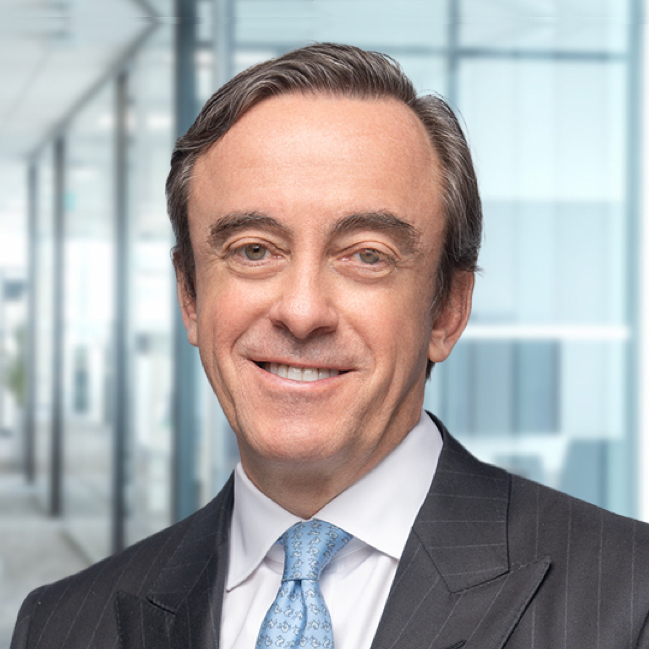


Welcome to Soundbites, weekly insights on market trends and investment strategies, brought to you by Investment Executive and powered by Canada Life. For today’s Soundbites, we’re talking about dividend investing with Kevin McCreadie, chief executive officer and chief investment officer with AGF Management. We talked about long-term trends, and we started by asking him to describe the current moment for dividend investors.
Kevin McCreadie (KM): I think you have to go backwards a little bit and set the table to understand where we are. From ’08 to late 2022, we lived in a world of almost near-zero interest rates. And so, while people were reaching for dividends, they actually were reaching more for growth. Anything growth-y did well. Now you’re at a place where there’s a normalized level of rates. And also, the last two years have been really outsized returns. You’re looking at returns in the 20% to 25% [range] back-to-back. This third year, that we’re entering, is going to be a much more challenging year. So, the ability to drive your returns with a higher certainty around a portion of that, leads you to believe that dividend investing will probably, finally, have a stronger portion of a portfolio’s return.
Long-term trends
KM: Go back 30, 40 years, if the markets gave you 9% or 10%, dividends gave you 30 or 40% of that. We’re probably in that world that looks like a 9% to 10% kind of world. And we’re constructive on the equity markets this year. And within Canada … where there’s a lot of pessimism right now around the economy because of this tariff situation, I would take the other side. We’ve successfully cut rates. You’re starting to see demand pick up slightly. And whatever the tariff situation will become, I believe you’re going to have a very accommodative central bank on the backside. We have some fairly healthy sectors. And you think about just the TSX. The TSX gives you dividend yield today — just buying the index — of 2.7%. And yet, you compare that to a Canadian five-year bond at 2.7% and a very different taxation or even a 10-year bond at 3% with a very different taxation. And you put that on the back of an index that probably trades at 13 or 14 times. Compare that to the S&P, which is probably in mid-20s, right? So not only is the market cheaper, you’re getting a greater portion of it coming from this compounding effect of dividends. So Canadian dividends look pretty good to me.
Anticipating dividend cuts
KM: Think about dividends as looking for quality. First rule of thumb is don’t look for the absolute highest dividend. You need to understand how sustainable that is. So, sustainability for me is, look at the payout ratio. How much of the dividend is being paid out of the cash flow? We think of companies with below a 50% payout ratio — if a company makes $100 and they’re giving $50 away to their shareholders in dividends — [that’s a] pretty good sign. Stay away from those really high payout ratio names. Some of these companies that are almost paying out 90 or 100% of the cash they earn, that payout ratio leaves them with very low ability to grow. The day they run into an economic hiccup, their ability to pay that dividend will be challenged. And also the companies that are highly levered and paying a high dividend, [face] kind of the similar effect. You know, if the debt load is too high and they have to cut someplace and they fear getting a debt downgrade, they probably cut or reduce the dividend. So those two would be highly negative to the share price.
Strong investment prospects
KM: I would say, just look around the world. Again, I always tell people, broaden your landscape about dividends. Think more globally. In the U.S., because it’s had such a big run, your dividend yield is probably in the low ones. As I said, in Canada you’re in the high twos. You go to places like Europe, like the U.K., you’re in the mid-threes, 3.5%. You can get yield besides just [in] utilities and REITs. You can go into material, energy companies. But do it around the world and you can create a package of yield and returns, that, if you start to compound them in this low-return environment — like, if we’re only going to get 8% or 9% this year and we can find a way to put together 3% to 3.5% of that through yield that compounds — that’s a much safer place.
And finally what’s the bottom line on dividend investing in the current moment?
KM: Yeah, this is a different year; 2025 is going to be a year of volatility. And while we’re positively constructive on the equity market longer term this year, it’s going to be met with a lot of volatility. We don’t think we’re going back to a 20% to 25% return like we’ve seen the last two years. This is the third year of a bull market. Let’s capture as much of the return that we can get from that compounding effect. If we can find 2% to 3% of the portfolio that’s giving us a certainty of that dividend, it will ride us through some of that volatility. The days where the equity market is down a lot because of some event in the U.S. or some other place around tariffs, you will see a lot of those dividend names outperforming and holding an anchor to the portfolio. So, it’s not just about getting to the certainty of the return through the dividend. It’s about giving you some stability within the portfolio to help you ride through the volatility.
Well, those are today’s Soundbites, brought to you by Investment Executive and powered by Canada Life. Our thanks again to Kevin McCreadie of AGF Management. Visit us at investmentexecutive.com, where you can sign up for our a.m. newsletter and never miss another Soundbite. Thanks for listening.
**
Go back to the article.