
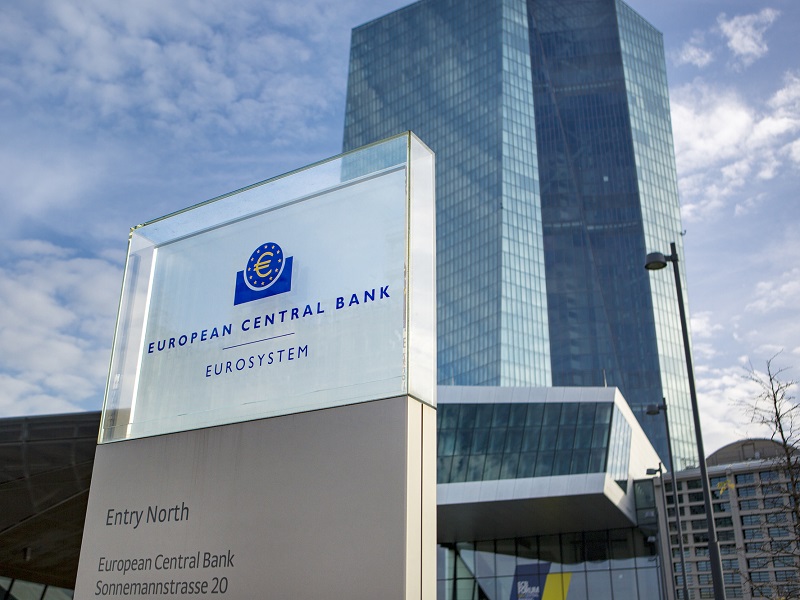
Financial system stability remains under strain, and the downside risks are being “underestimated,” the European Central Bank (ECB) warns, as the financial markets continue to weather the effects of an ongoing global economic shock and energy supply disruptions triggered by the conflict in the Middle East.
In its latest report on financial stability, the ECB said “vulnerabilities remain elevated” amid the conflict that has touched off economic and energy sector strains that are continuing, leaving the financial markets facing fallout that is uncertain in terms of severity and duration.
Overall, the ECB said there’s “a fair risk that financial market sentiment could deteriorate, as downside risks related to geopolitical, fiscal and macro-financial developments appear underestimated.”
The continuing conflict in the Middle East, and its economic consequences, are at the centre of those concerns.
“The current energy supply shock poses upside risks to inflation and downside risks to economic growth,” ECB vice-president Luis de Guindos said in a release.
“It could also increase market volatility and challenge debt servicing capacities as financing costs rise in an environment of weaker economic growth,” he added.
These strains come on top of lingering uncertainty about global trade and shifting geopolitical relations, the ECB noted.
“Initial financial market adjustments proved short-lived … leaving equity valuations still stretched by historical standards,” the bank noted.
At the same time, corporate bond pricing is also “vulnerable to the unusually high level of geopolitical and policy uncertainty,” it said.
Additionally, the challenging economic environment could further strain public finances, the ECB said, which could lead to a repricing of sovereign risk.
The financial sector is facing looming challenges too, it noted, particularly non-bank financial firms that are active in the private markets, which could amplify stress in mainstream financial markets.
“… the combination of low liquidity buffers, high portfolio valuations and concentrated exposures on their balance sheets raises the risk of forced asset sales that could amplify market stress,” it said, which could spill over to the banking sector too, as banks that are reliant on funding from non-banks could be exposed to “liquidity and funding risks if market conditions were to become volatile.”
Against this backdrop, the ECB said bank regulators should maintain existing capital buffer requirements and other measures on borrowers to “preserve bank resilience and ensure sound lending standards.”
It added that “persistent liquidity and leverage vulnerabilities in the non-bank financial intermediation sector call for a comprehensive policy response.”