


(Runtime: 5:00. Read the audio transcript.)
**
A decade of low growth for real assets could come to an end as economic conditions shift, says Tyler Rosenlicht, senior vice-president and portfolio manager at Cohen & Steers.
Rosenlicht said the late 2000s China boom led to an overinvestment in commodity capacity and commodity supply. Low inflation, low borrowing cost and a lack of producer discipline also played a part in suppressing commodity prices.
But times are changing, he said.
“We think that we’ve exited what we talk about as the era of abundance, which was the 2010s,” he said. “We think we’ve shifted into what we’re calling the era of scarcity, which is basically a reverse of each of those things. Higher average inflation, more volatile inflation, and generally higher commodity prices going forward.”
Speaking on the Soundbites podcast this week, Rosenlicht said the trend augurs well for Canadian commodity investors.
“Obviously, Canada is endowed with great resources across energy, agriculture, metals and mining,” he said. “Where the puck is going, we think, is a really attractive place for commodities themselves and then for companies that produce commodities.”
In terms of supply, demand, and marginal costs, he added, all the needles are pointing in the right direction for increased prices.
“I hesitate to ever say that something’s like a perfect storm, but as we look at those three factors… the long-term worldview for commodities and resource producers is really attractive,” he said.
The agriculture sector
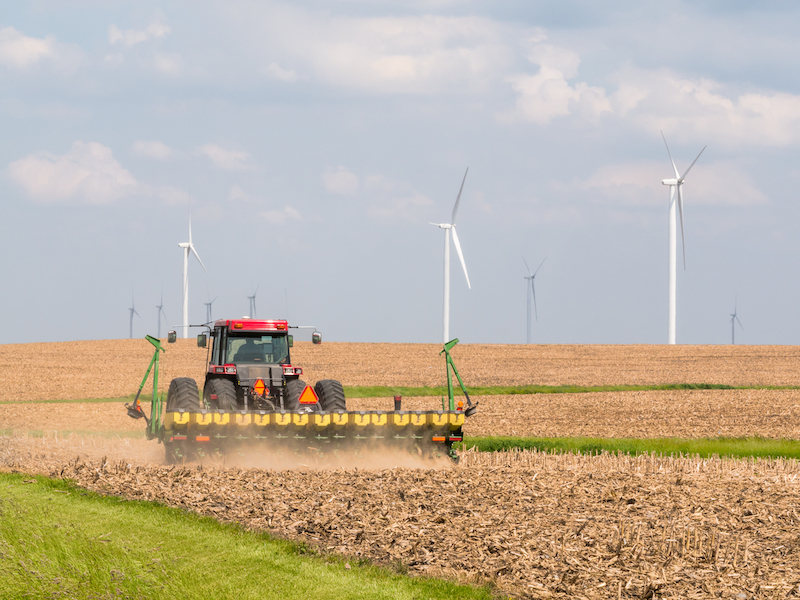
Rosenlicht said growing global wealth dictates greater calorie needs.
“As people get wealthier, they consume more calories, they consume different types of agriculture, more proteins,” he said. “We’re going to have better precision farming, better technologies, more fertilizer use to make sure yield-per-acre rises.”
Companies that facilitate improving yields will benefit from better pricing structures and more predictable revenues, he said.
“You’re going to see a big investment in technology for farmers. It’s going to be expensive, but those that are well capitalized and large and are able to pay for the best-in-class technologies are really going to be the ones that see their yields go up.”
According to Rosenlicht, protein producers — pork, chicken and beef packers — especially stand to benefit.
“Their input costs potentially come down as grain prices come down,” he said. “And generally speaking, the demand for proteins is fairly strong globally, so their margins should widen out.”
Energy companies
Rosenlicht said the outlook for energy companies is similarly bright. Rising energy demand means we’re not headed for a world where traditional energy sources are ‘out’ and clean energy is ‘in.’
“The energy transition is happening, but it’s not happening in the way people think. We’ve actually tried to reframe the conversation away from energy transition and into what we call energy addition,” he said. “Global energy needs are rising. That means we need to invest in every type of energy supply that we can.”
He is particularly interested in uranium, the key ingredient for a re-emerging nuclear industry.
“In the global energy markets, the tension today is you can either have 24/7 365, baseload, predictable energy, but it has a carbon emissions profile. Or you could have really clean energy, but it’s not predictable. Nuclear is the one that can bridge both worlds,” he said.
It will take time for the nuclear industry to ramp up again after decades of low or declining growth, but more reactors seem to be a given.
“We think the battleship has turned. It is starting to grow again, and it will see a big inflection, probably around 2030 or the early 2030s,” he said. “And that’s good for nuclear generators, good for power prices, and good for uranium producers.”
Metals and mining
In terms of minerals, technology and infrastructure development is driving demand for industrial metals, particularly copper, lithium, nickel and cobalt.
“We’ve generally seen an underinvestment in the supply side in the last decade,” he said. [But] the demand impulse is going to be very strong, and we’re going to need higher prices to make sure the supply is there.”
The key takeaway
Rosenlicht pointed out that real assets tend to serve as an inflation hedge, making them particularly attractive in a world with higher average inflation.
“Commodities and real assets cost you very little in your portfolio over time, but provide a lot of value, particularly in inflationary periods,” he said.
And while real assets have floundered in recent years, he said shifting global priorities and economic conditions are making real assets increasingly attractive.
“The next 10 years, we think, are going to be different [for real asset performance]. We think investors should be taking a really close look at a lot of this stuff.”
**
This article is part of the Soundbites program, sponsored by Canada Life. The article was written without sponsor input.
This article is part of the Soundbites program, sponsored by Canada Life.
The article was written without sponsor input.